
A fence is the kind of project that's "small" until you start pricing it out and realize it costs as much as a used car. The difference between a five-year fence and a thirty-year fence is mostly the choices you make in the first hour. Here's how to make the right ones for an Austin backyard.
The short answer: board-on-board cedar on galvanized steel posts is the fence we recommend most often in Central Texas. The rest of this page explains why, and when something else is the better call.
Cedar vs. pressure-treated pine
The two materials behind nearly every wood privacy fence in Austin.
| Western red cedar | Pressure-treated pine | |
|---|---|---|
| Installed, 6 ft, side-by-side | $32 to $48 per ft | $28 to $40 per ft |
| Lifespan in Austin | 20 to 30 years | 15 to 20 years |
| Rot and insects | Naturally resistant | Chemically treated |
| Movement as it dries | Low | More warping and twisting |
| Left unstained | Weathers to silver-grey, still sound | Greys and checks faster |
| Maintenance | Optional seal every 3 to 5 years | Stain every 2 to 3 years |
Cedar is worth it if you can swing it. It looks better, lasts longer, moves less, and you can leave it alone and it still will not rot. Pressure-treated is the right call if you are fencing a lot of footage, or you were always going to stain it anyway and do not want to pay for the cedar grain you are about to cover up.
The styles, compared
| Cedar style | Per ft installed | Privacy |
|---|---|---|
| Side-by-side | $32 to $48 | Good at first, gaps open as it dries |
| Board-on-board | $38 to $55 | Full, and stays that way |
| Shadowbox | $40 to $58 | Partial, same both sides, lets air through |
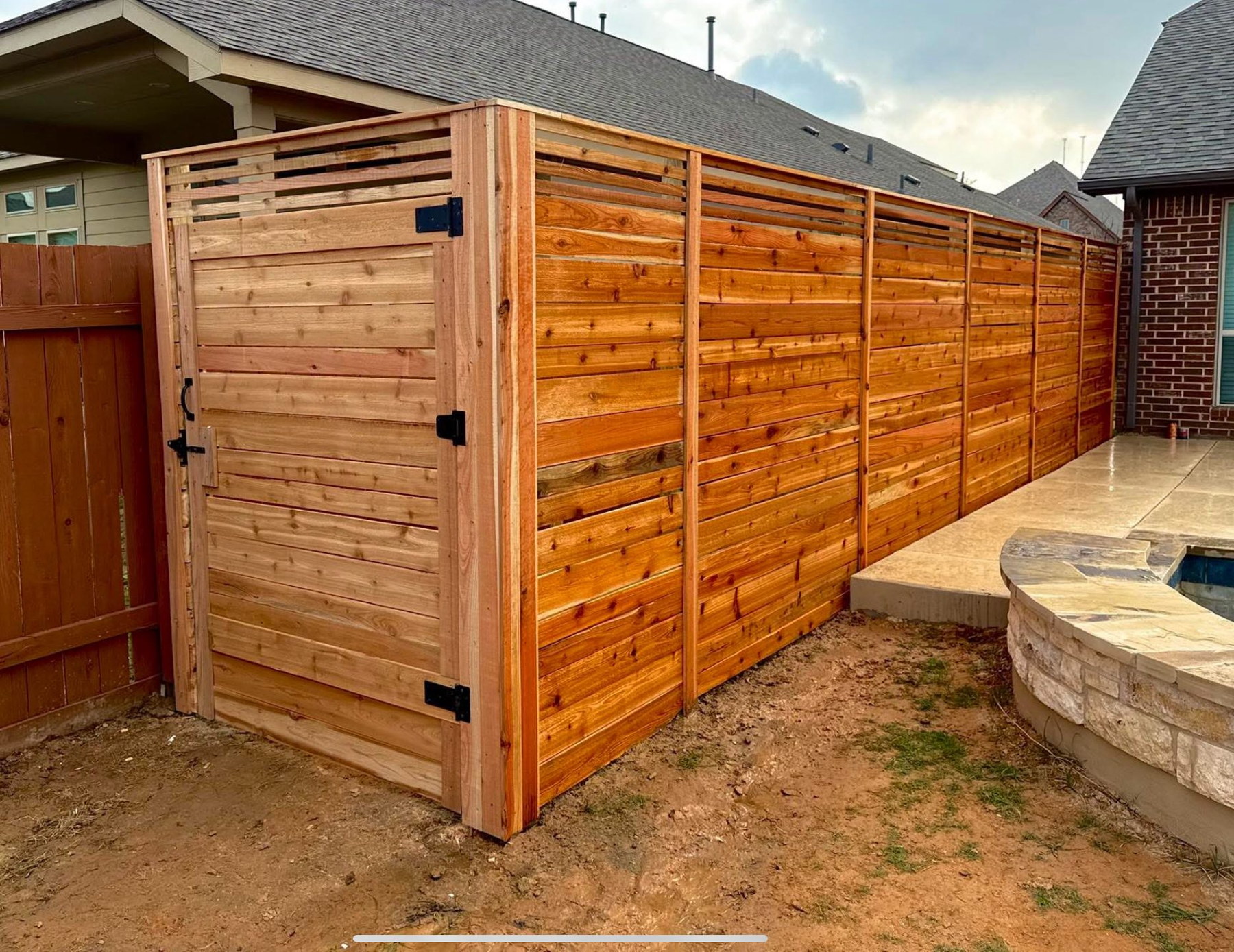
| Horizontal | $48 to $72 | Full, modern look, wants a level yard |
| Split-rail ranch | $22 to $38 | None, it is a boundary not a screen |

Side-by-side
Pickets edge to edge. The cheapest real privacy fence, and perfectly respectable. The catch is shrinkage: through an Austin August the boards dry and pull apart, and gaps open that you can see straight through.
Fine for a side yard. Frustrating along a patio.
Board-on-board
Each picket overlaps the gap between the two behind it, so as the wood moves the fence stays fully private. Costs roughly 15 percent more than side-by-side, and it is the style we build most, because it solves the one thing people complain about with a new wood fence.
Shadowbox
Boards alternate sides of the rail, so the fence looks identical from your yard and your neighbour's, and air moves through it. A good compromise on a shared line or where breeze matters more than total privacy.
Horizontal
A popular style in Austin, and it suits modern and Hill Country houses. Two things to know.
It needs a level run, because on a slope it has to step down in panels, which changes the look. And it costs 20 to 40 percent more, because horizontal boards need more framing behind them to stay straight over a long span.
The part that decides how long it lasts: the posts
People spend an hour choosing a picket style and thirty seconds on the posts. It should be the other way round.
Wood posts fail at ground level. The concrete collar around a wood post holds water against it right where it meets the soil, which is exactly where rot starts, and you cannot see it until the fence leans. Add Austin's clay, which swells and shrinks several inches a year on the east side of town, and a shallow wood post gets worked loose from both directions.
Galvanized steel posts remove that failure entirely. They cost roughly $12 to $20 more per post, which on a 150-foot fence with posts every eight feet is a few hundred dollars total.
They routinely outlast two sets of pickets, and from your side of the fence they sit hidden behind the boards. It is the single highest-value line on most fence quotes and we will always price it as an option.
Whatever the post, depth matters more than material. A six-foot fence post should be set roughly a third of its above-ground height into the ground, and deeper in expansive clay.
Want pricing for your yard? Use the Design Builder to pick a style, height and stain. We will come measure for free and give you a line-itemed quote with the steel post option priced alongside.
Design my fenceGates are where cheap fences fail first
A gate moves thousands of times a year while the rest of the fence just stands there. That is why gates sag inside a year on fences built to a price.
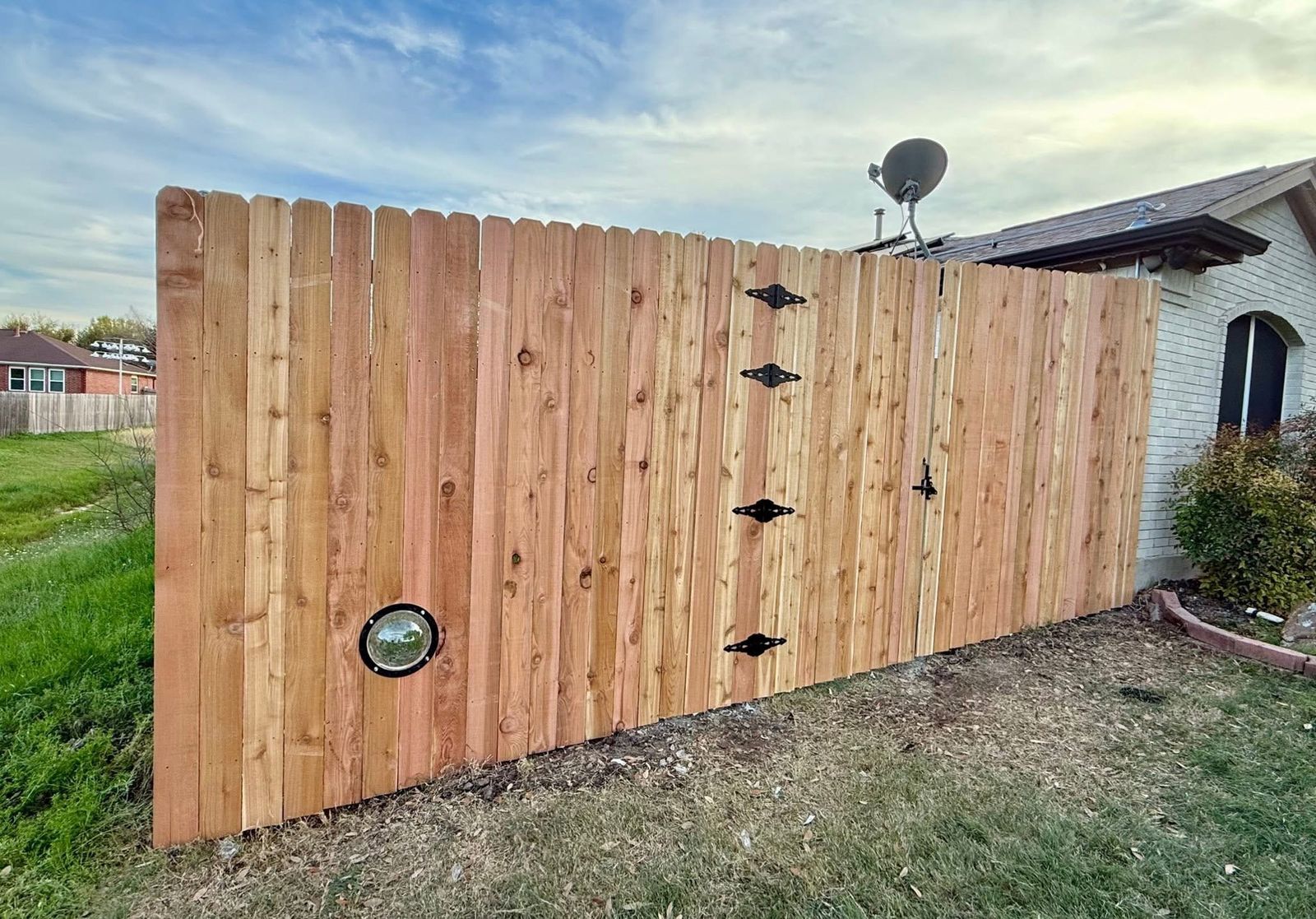
A gate that lasts needs three things. A heavier hinge-side post set deeper than the line posts, because it carries the whole cantilevered weight of the gate. A diagonal brace running from the bottom hinge corner up to the latch side, so the frame cannot rack.
And hardware rated for the weight, not whatever came in the box. On a double drive gate, a steel frame behind the cedar is worth considering.
How tall should it be?
- 4 feet: front yard, decorative, defines a space without blocking the view.
- 6 feet: the Austin backyard standard. Blocks street and neighbour sightlines and nearly every HOA allows it.
- 8 feet: maximum privacy. Possible in many places, but HOAs and local rules vary, especially near the street and on corner lots, so we check before we quote.
Stain it, seal it, or leave it?
Cedar weathers to a soft silver-grey within one to two years if you do nothing, and plenty of Austin homeowners prefer it that way. Pressure-treated looks better stained and lasts longer sealed.
- First coat: six to twelve months after installation, once the wood has dried. Stain on wet wood peels.
- Refresh: every two to three years for pressure-treated, three to five for cedar.
- Colours that age well here: honey, walnut, natural cedar, driftwood grey and, increasingly, black.
HOA rules and which side faces out
Before we build any fence in greater Austin, we check whether your HOA has approved styles, heights, materials and stain colours, whether you are in a historic district, the setbacks on corner lots, and which way the finished face has to point. Many subdivisions require the good side facing out toward the street or the neighbour, which is one more reason board-on-board and shadowbox are popular: they look finished from both sides. See our guide to Austin HOA approval for how the review process runs.
What a whole backyard costs
| 150 linear feet, 6 ft tall | Installed |
|---|---|
| Pressure-treated pine, side-by-side | $4,200 to $6,000 |
| Cedar, side-by-side | $4,800 to $7,200 |
| Cedar, board-on-board | $5,700 to $8,250 |
| Cedar, horizontal | $7,200 to $10,800 |
| Upgrade to steel posts | add about $230 to $380 |
| Tear-out and haul of an old fence | add about $3 to $6 per ft |
Greater Austin installed pricing for 2026. Gates are priced separately, since a single walk gate and a double drive gate are very different jobs.
For the full breakdown by style, height and add-on, see the 2026 cedar fence cost guide. Most residential fences take two to five working days to build, plus half a day to tear out an old one.
Our pick
If you only ever build one fence at this house, build board-on-board cedar on steel posts, with a properly braced gate. The cedar looks better every year, the overlap keeps it private through a dry summer, and the steel posts take away the thing that ends wood fences early.
A pressure-treated fence on good posts is also a perfectly respectable choice. Just make a real decision instead of defaulting to whatever was cheapest in the quote pile.
Ready to get one built? See privacy fence installation in Austin for current pricing and to book a free on-site measure. If you have a fence that is leaning or sagging rather than one you want replaced, our fence repair cost guide covers when a repair is enough.
Privacy fence questions, answered
What is the best privacy fence for Austin?
For most Austin backyards, board-on-board cedar on galvanized steel posts. Cedar handles the heat and resists rot without chemicals, board-on-board keeps its privacy as the wood shrinks through a dry summer, and steel posts remove the single most common failure, which is wood posts rotting at ground level. Pressure-treated pine is a perfectly sound budget choice if you plan to stain it.
How much does a privacy fence cost in Austin?
Side-by-side cedar runs $32 to $48 per linear foot installed, board-on-board $38 to $55, shadowbox $40 to $58, and horizontal cedar $48 to $72. Pressure-treated pine runs roughly $28 to $40. A typical 150-foot Austin backyard in side-by-side cedar lands around $4,800 to $7,200. Gates, steel posts, stain and tearing out an old fence are the usual additions.
Is cedar or pressure-treated pine better for a fence in Texas?
Cedar is better if you can afford it. It resists rot and insects naturally, moves less as it dries, and can be left unstained to weather to silver. Pressure-treated pine costs less, is chemically protected, and is the sensible choice for long runs or if you plan to stain anyway. Both need proper posts, and the posts matter more than the pickets.
Should I use steel posts on a wood fence?
Usually, yes. Wood posts fail at ground level, where the concrete collar holds water against the wood, and a fence is only as good as its posts. Galvanized steel posts cost roughly $12 to $20 more per post, routinely outlast two sets of pickets, and on a 150-foot fence add only a few hundred dollars. From the yard side they can be fully hidden behind the boards.
What is the difference between board-on-board and side-by-side?
Side-by-side puts the pickets edge to edge. It is the cheapest privacy fence, but as the wood shrinks in summer, gaps open between boards. Board-on-board overlaps each picket over the gap between the two behind it, so it stays fully private as the wood moves. It costs roughly 15 percent more and it is the style we recommend most often in Central Texas.
How tall can a privacy fence be in Austin?
Six feet is the standard backyard height and the one nearly every HOA allows. Eight feet is possible in many places, but HOAs and local codes vary, and some restrict height near the street or on corner lots. We check your HOA covenants and the applicable city or county rules before quoting, so nobody builds a fence that has to come down.
Is a horizontal fence more expensive?
Yes, roughly 20 to 40 percent more than a standard vertical fence. Horizontal cedar runs about $48 to $72 per linear foot because the boards need more framing behind them to stay straight, the spacing takes longer to install, and it needs a level run. On a sloped yard it steps down in panels, which changes the look, so it suits flat lots best.
How long does a wood privacy fence last in Austin?
A well-built cedar fence lasts 20 to 30 years in Central Texas, and pressure-treated pine 15 to 20. In practice, the pickets are rarely what fails first. Wood posts rotting at ground level and gates sagging off undersized hinge posts are what end most fences early, which is why steel posts and a properly braced gate add more years than any choice of picket.
Sources
- Work exempt from building permits, City of Austin Development Services: which decks, fences, retaining walls and small accessory structures can be built without a building permit.
Prices on this page come from our own 2026 Austin-area quotes. Rules change, so we check which ones apply to your address before every build. New to a term? See our plain-English glossary.