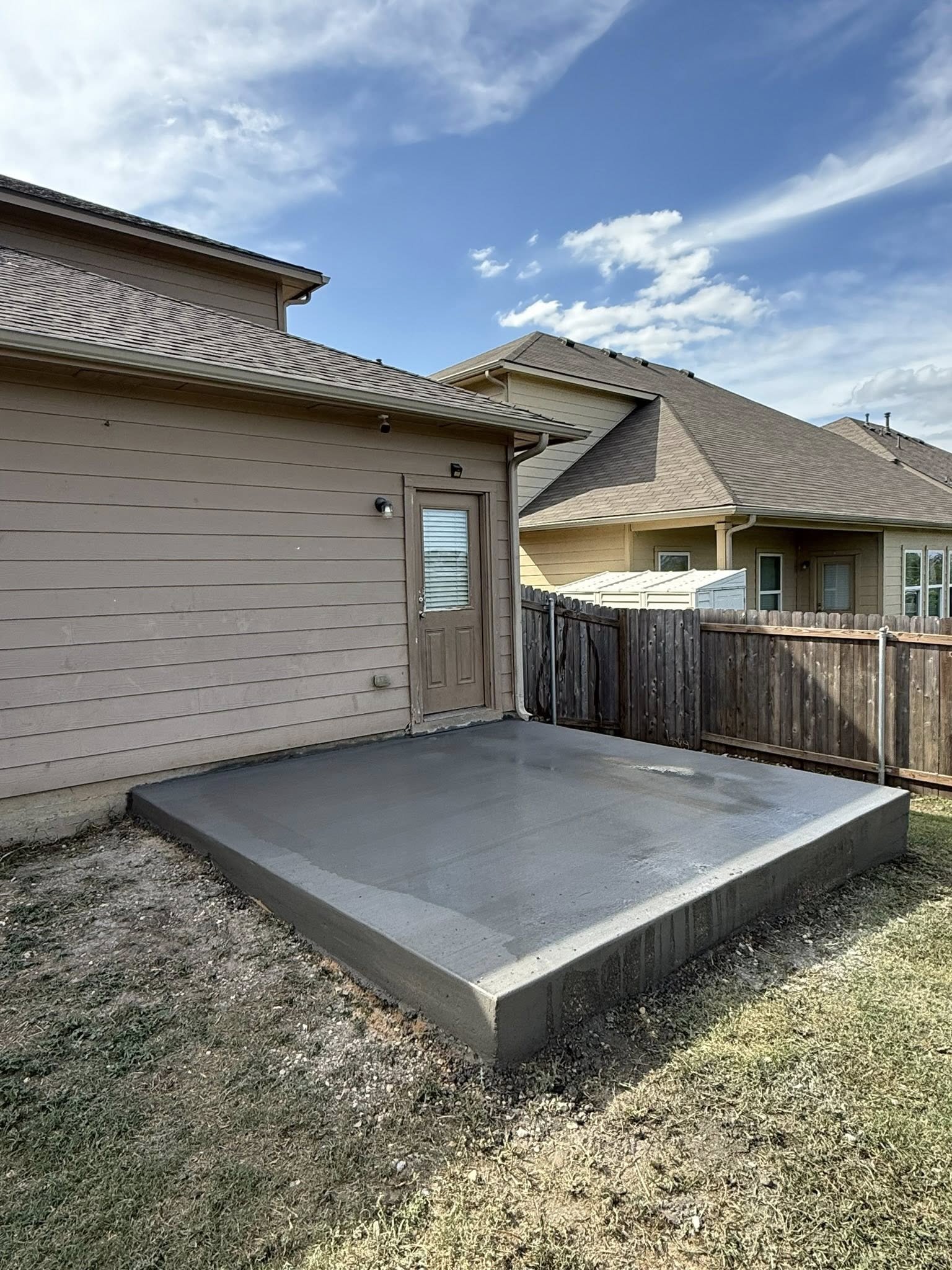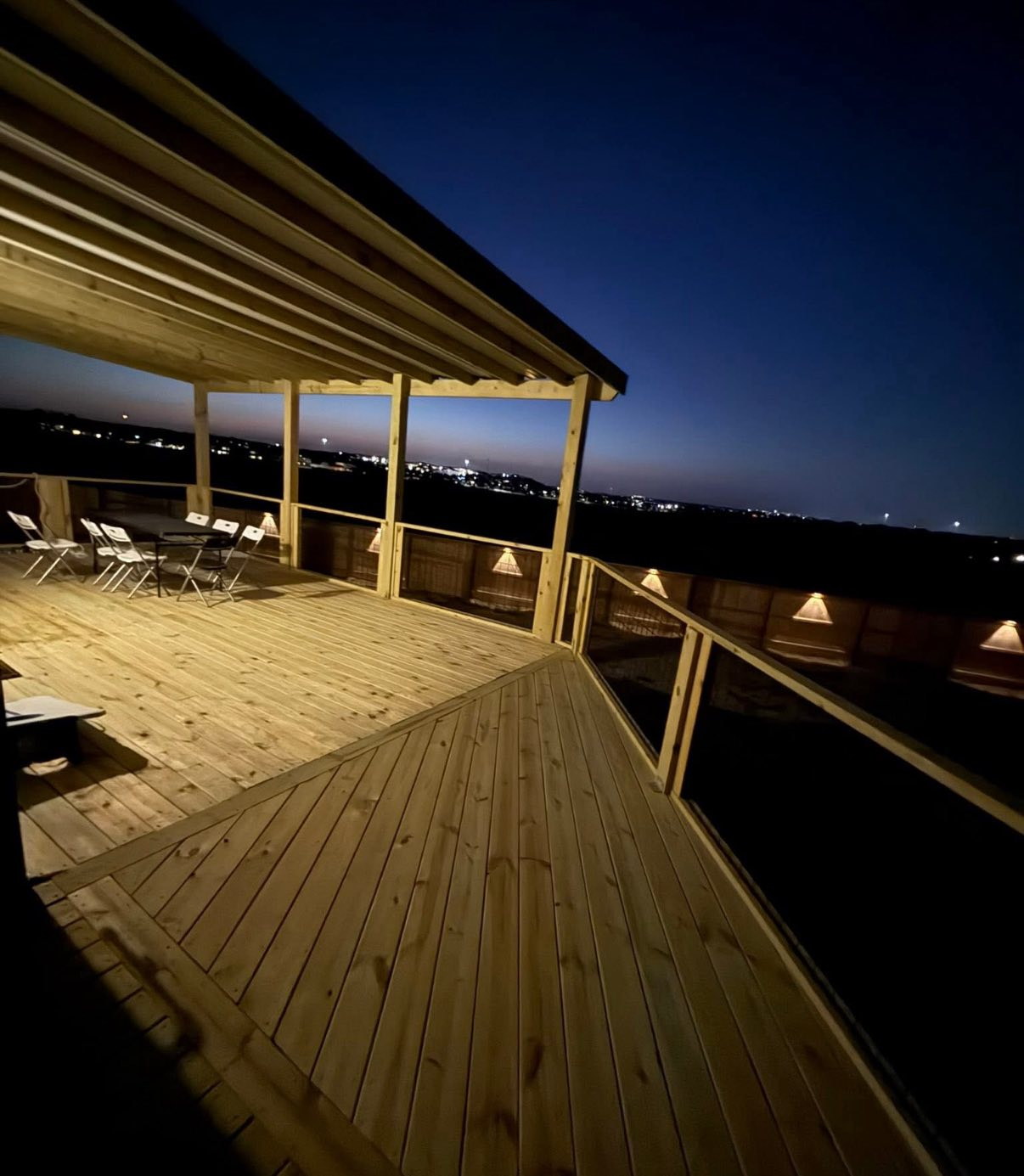
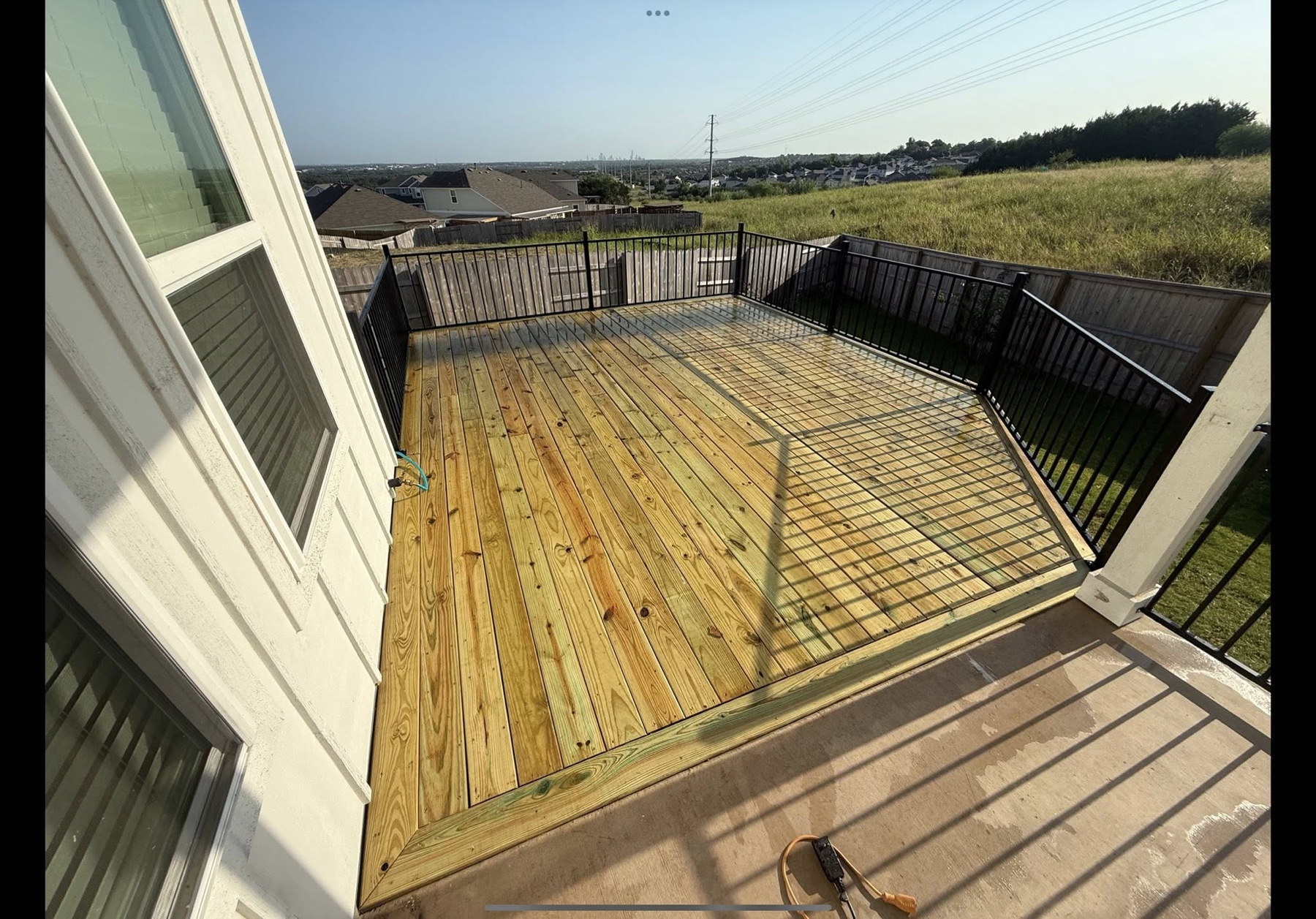
If you have searched anything close to "how much does a deck cost in Austin," you already know the answer most contractors give: "it depends." That isn't wrong, but it isn't useful either. So let's start with real numbers. Then we'll get into what actually moves the price.
The short answer: real Austin deck pricing in 2026
Most full deck builds in greater Austin land in one of three buckets, depending mostly on the material you pick and the size of the build. These are total installed prices (materials, labor, hardware, demo, and cleanup) for a standard backyard deck:
| Decking material | Per square foot, installed | Typical 300 sqft deck |
|---|---|---|
| Pressure-treated pine | $30 to $45 | $9,000 to $13,500 |
| Western Red Cedar | $50 to $75 | $15,000 to $22,500 |
| Composite (Trex / Fiberon) | $60 to $100 | $18,000 to $30,000 |
These are honest 2026 ranges based on what we are actually quoting customers in Austin, Round Rock, Dripping Springs, Pflugerville, and across Hays, Travis, and Williamson counties. If a contractor quotes you well below the low end of this table, ask very pointed questions about the lumber grade, the framing, and the warranty. Cheap quotes get expensive in five years.
Want a real number for your deck? Use our free Design Builder. Pick the material, finish, and size, and John will reach out as soon as he can with a line-itemed quote. No fees, no obligation.
Design my deck →What drives deck cost up or down in Austin
1. Material is the biggest single factor
The cost gap between pressure-treated pine and composite is usually 50 to 100 percent. Pressure-treated is a great-looking, durable deck if you stay on top of stain or sealer every two to three years. Cedar is a step up in beauty and a step down in maintenance. Composite costs the most up front and saves the most over twenty years because you literally never seal it.
2. Square footage and shape
Square decks are cheaper than L-shaped, multi-level, or curved decks. Every cut and corner adds labor and hardware. A 200 sqft rectangle costs less per square foot than a 200 sqft deck that wraps around a corner of the house.
3. Height off the ground
A ground-level deck (under 30 inches) is usually the most affordable. Above 30 inches you need code-required railings, more substantial footings, and often stairs with structural stringers, all of which add cost. A second-story deck off the back of a two-story home can run 30 to 50 percent more per square foot than a ground-level one.
4. Built-in features
The pretty stuff has real costs. Rough adders to budget for:
- Custom railing: $40 to $90 per linear foot, depending on cable, metal, or wood.
- Built-in lighting: $400 to $1,800 for step lights and accents.
- Attached pergola: $4,000 to $12,000+ depending on size and material.
- Built-in benches and planters: $300 to $800 per linear foot.
- Wood-plank ceiling under a covered deck: $12 to $25 per square foot.
5. Site conditions
If we have to demo an old deck, level a sloped yard, dig footings through limestone (you live in Austin, so probably yes), or work around utility lines, that work shows up in the quote. Most reputable contractors include site prep in the line items so you can see exactly what is going on.
Pressure-treated vs. cedar vs. composite, in plain English
Pressure-treated pine
The most common deck material in Austin and the most affordable. Treated at the mill to resist rot and termites. Looks great when stained, lasts 20+ years with regular sealing, and can be painted any color. The downside is real: you are signing up for a stain or seal coat every two to three years if you want it to keep looking new.
Western Red Cedar
Naturally rot-resistant and bug-resistant without chemicals. Beautiful warm reddish-brown that weathers to a soft silver-grey if you let it. Lifespan is 25 to 30 years. About 25 to 50 percent more than pressure-treated. We love cedar in the Texas climate because of how it ages and how it smells when it's fresh.
Composite (Trex, Fiberon, TimberTech)
Wood fiber blended with recycled plastic. Won't warp, splinter, or rot. No staining or sealing, ever. Most premium boards carry 25-year warranties. The catch is upfront price (50 to 100 percent more than PT) and, if you pick a cheap composite, a slightly plasticky look. Picking the right brand matters more than people realize. Talk to your contractor about which board they trust.
Where to save on deck cost (and where not to)
- Keep the shape simple. A straight rectangle costs much less to build than the same square footage with curves and angles.
- Pick PT and stain it well. A properly stained pressure-treated deck looks fantastic and lasts decades. Spend on a good stain, not exotic wood.
- Skip the upgraded railing if your deck is low. A deck under 30 inches doesn't need a railing. That can save $1,500 to $4,000 right there.
- Bundle related work. If you are also replacing a fence, doing siding, or fixing the roof, bundling can save real money on mobilization and dump fees.
- Don't cheap out on framing. The frame is the part you never see and the part that fails first if it's wrong. We use joist tape, hot-dipped galvanized hangers, and properly sized footings on every deck. That is not the place to save $300.
How long does a deck build take?
Most backyard decks take 5 to 10 working days from the day the crew shows up. Larger or multi-level builds can run 2 to 3 weeks. Permits in Austin add another 1 to 4 weeks before the build starts, depending on the jurisdiction. We pull every permit ourselves and never start without one.
When should you start the conversation?
If you want a deck ready for grilling season, you want to be having the conversation with a contractor in February, March, or April. Summer slots are filling up now (2026 is no exception). Fall projects (October and November) usually have shorter lead times and more flexible scheduling. Mid-summer is doable, but you'll be working around 100-degree weather, so keep that in mind. See the full month-by-month build season guide →
Ready for a real number? Skip the guessing. Use the Design Builder to map out exactly what you want, and John gets back to you the same day with a free quote.
Design my deck →