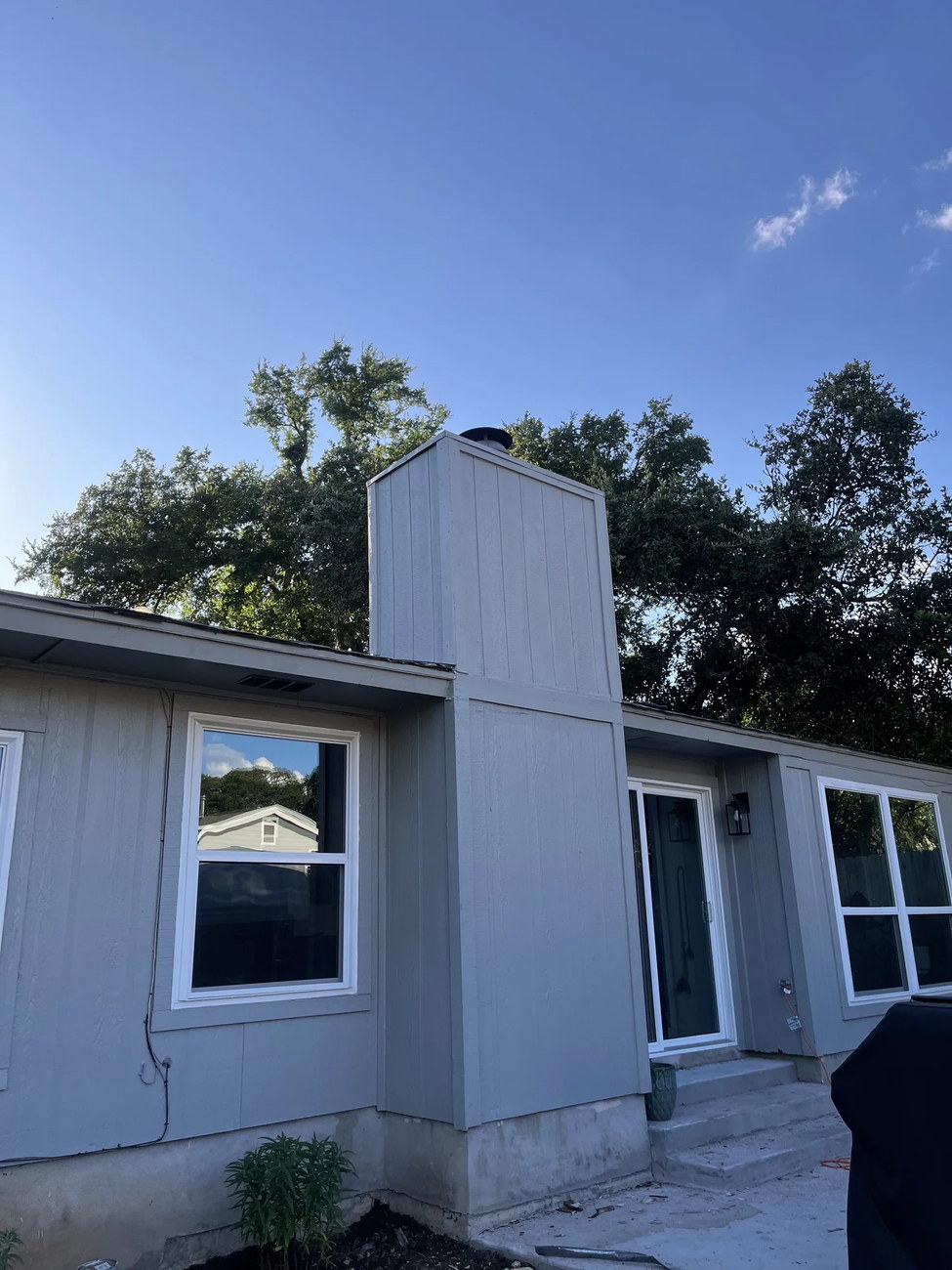
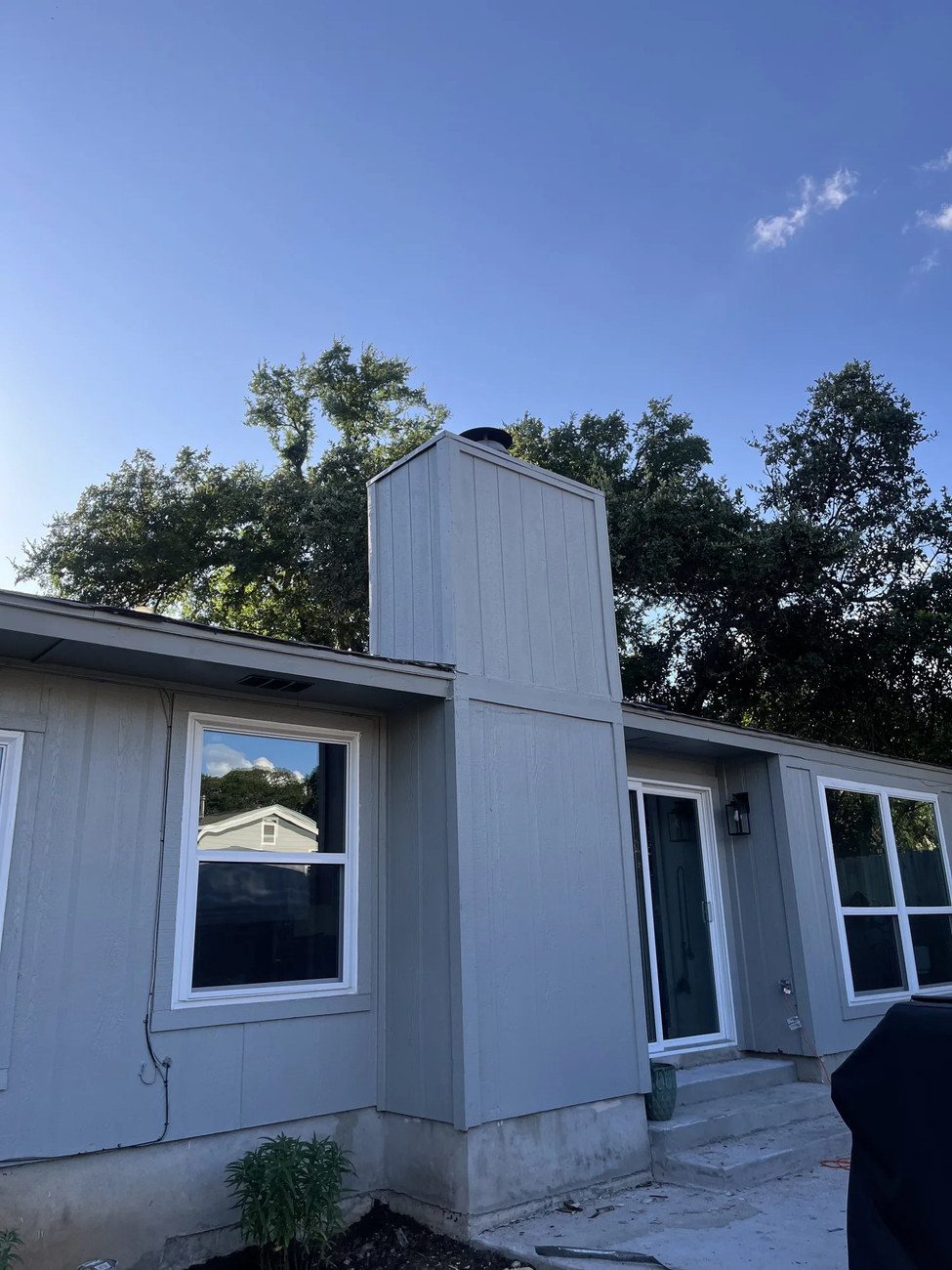
If you are re-siding a house in Austin, the shortlist almost always comes down to two names: James Hardie fiber cement and LP SmartSide engineered wood. Both look like painted wood from the street. Both resist termites. Both are what most builders and remodelers in Central Texas put on houses today. They are built from completely different materials, though, and that difference shows up in how they handle heat, water, fire and time.
We install and repair both, so here is the honest comparison: what each one is, where each one wins, what it costs, and which one we would put on most Austin homes.
Hardie vs. LP SmartSide at a glance
| James Hardie (fiber cement) | LP SmartSide (engineered wood) | |
|---|---|---|
| Made from | Cement, sand and cellulose fiber | Wood strands bonded with resin, treated with zinc borate |
| Rot and termites | Does not rot; termites cannot eat it | Treated to resist fungal decay and termites |
| Fire | Noncombustible | Wood-based, so it can burn |
| Weight | Heavy; slower to install | Lighter; faster to cut and hang |
| Impact | Rigid; can crack or chip on a hard hit | Flexes; shrugs off dings better |
| Warranty | 30-year limited, transferable, non-prorated | 5 years full labor and material, then prorated to 50 years |
| Installed cost | $10 to $16 per sq ft in Austin | Usually a little less than Hardie |
What James Hardie fiber cement is
Hardie board is made from cement, sand and wood fiber, pressed into planks, panels and shingles and cured. Because it is mostly cement, it does not rot, termites cannot eat it, and it does not burn. It holds paint well, it does not warp in direct sun, and it stands up to wind-blown debris.
James Hardie also sells its products by climate. Its HZ10 line is the formula the company engineers for hot, humid southern conditions like ours, and the siding carries a 30-year limited, transferable warranty that is non-prorated for the full term. That means the coverage does not shrink as the years go by.
The trade-offs are weight and handling. Fiber cement is heavy, it needs careful dust control when it is cut, and it is rigid, so a hard hit from a mower-flung rock or a ladder can chip or crack a board. Those are installation and labor costs more than performance problems, but they are why Hardie usually costs more.
For more on the Hardie side, including real Austin pricing by house size, see our Hardie siding cost guide.
What LP SmartSide engineered wood is
LP SmartSide is made from wood strands coated with resins and waxes and treated with zinc borate, then pressed into boards with a resin-saturated overlay on the face. LP calls the treatment SmartGuard, and it is what lets an engineered wood product resist fungal decay and termites.
Because it is wood-based, LP is lighter than fiber cement, easier to cut, and more forgiving when something hits it. It comes in long lengths, which means fewer seams on a long wall, and it takes paint well. LP backs SmartSide with a 5/50-year limited warranty: five years of full labor and material coverage, then prorated coverage on the substrate out to 50 years.
The trade-off is that it is still wood. Engineered wood is very good at handling the occasional wetting, but it does not tolerate standing water or unsealed edges the way cement board does. Every cut end has to be sealed and painted, it needs proper clearance from the ground and roofs, and paint is its armor, so the finish has to be kept up.
Austin heat, sun and storms: which holds up better?
Austin is hard on siding in three ways: long stretches of direct sun, heavy downpours, and hail.
- Sun and heat. Both products are stable in heat when they are installed and painted correctly. Fiber cement does not move with moisture the way wood does, which is part of why paint tends to last longer on it on our west and south walls.
- Water. This is where Hardie pulls ahead in Central Texas. A missed seal on a cut edge, a gutter that overflows, or a sprinkler that hits the same spot every morning will eventually show up on engineered wood. Fiber cement does not care. We see far more water-related repairs on wood-based siding than on Hardie, and our siding repair guide walks through why.
- Hail and impact. LP has the edge on dings. Its flex lets it absorb a hit that might crack a fiber cement plank. In practice, hail damage to siding in Austin is usually cosmetic on either product, and both repair cleanly because current profiles are easy to match.
Fire
Fiber cement is noncombustible. Engineered wood is treated wood, and it will burn. For most Austin subdivisions that is not the deciding factor, but if your home backs onto greenbelt, cedar brush or open land on the west side of town, it is worth weighing. It is also one of the few places where the two products are not close at all.
Maintenance over the long haul
Neither product is maintenance-free, and anyone who says so is selling something. The difference is what happens when maintenance slips.
- Paint. Both products rely on paint for color and protection, and both come in factory-finished versions with their own finish warranties. On fiber cement, worn paint is mostly a looks problem. On engineered wood, worn paint lets water reach the wood, so repainting on schedule matters more.
- Caulk and seals. Check the joints around windows, doors and trim every couple of years. Caulk is cheap; the rot it prevents is not.
- Water sources. Keep gutters clear, point sprinkler heads away from the walls, and keep mulch and soil below the bottom edge of the siding. This matters for both products and matters most for LP.
- Impact damage. Replace a cracked fiber cement board or a gouged LP board when you see it, before water finds the opening.
A house that gets this basic care will get decades out of either product. A house that does not will show it on engineered wood first.
What each one costs in Austin
Hardie runs $10 to $16 per square foot installed in the Austin area, including tear-off, house wrap, trim and paint. A single elevation, meaning one side of the house, usually runs $6,000 to $14,000. LP SmartSide typically comes in a little under Hardie on the same house, mostly because it is lighter and faster to install, not because the material is dramatically cheaper.
The bigger cost drivers on either product are the same: how much rotted sheathing turns up once the old siding comes off, how much trim and how many windows there are, two stories versus one, and the paint system you choose. If you are only fixing damaged sections, most siding repairs in Austin land between $450 and $2,800.
Not sure which one your house should get? John will look at the walls, the sun exposure and the drainage, and quote both side by side if it is close.
Get a free siding quote →Installation matters more than the brand
Most siding failures we are called to fix are not product failures. They are installation failures: siding run tight to the roof or the ground, missing kick-out flashing where a roof meets a wall, unsealed cut ends, nails overdriven into the face, or house wrap lapped the wrong way. Both manufacturers publish detailed installation requirements, and the warranties depend on following them.
Whichever product you pick, ask the contractor how they handle clearances, flashing, cut ends and fasteners. A great product installed badly will fail faster than an average product installed well.
Our pick for most Austin homes
For most Austin houses, especially ones with full western sun, big roof runoff, sprinklers near the walls, or greenbelt behind them, we recommend James Hardie. It is the more forgiving product in our climate over 20 years and more, it does not burn, and its warranty does not shrink with time.
LP SmartSide makes sense when budget is tight, when the walls are well protected by deep overhangs, for sheds, garages and accessory buildings, or when matching existing LP on part of a house. Installed carefully and kept painted, it is a good product, and we will tell you honestly when it is the better value for your project.
Want to see what a full project looks like? Our Austin siding page covers how we re-side and repair homes across the area.
Hardie vs LP SmartSide questions, answered
Is Hardie board better than LP SmartSide?
In Austin, usually yes. Fiber cement does not rot, does not burn and handles water far better than engineered wood, and James Hardie offers a 30-year non-prorated warranty. LP SmartSide is lighter, flexes on impact and often costs a little less, which makes it a good choice for budget projects, protected walls and outbuildings.
How much does Hardie siding cost compared with LP SmartSide?
In the Austin area, Hardie fiber cement runs $10 to $16 per square foot installed. LP SmartSide usually comes in a little lower on the same house, mostly because it is lighter and faster to install. Rotted sheathing, trim, two stories and paint choices move the price more than the brand.
Does LP SmartSide rot?
LP SmartSide is treated with zinc borate and resins to resist fungal decay and termites, so it holds up well when it is installed and painted correctly. It is still wood-based, though, so unsealed cut ends, standing water and siding run too close to the ground or roof can lead to swelling and rot over time.
Is Hardie board fireproof?
Hardie fiber cement is noncombustible, meaning the board itself will not burn. That is one of the biggest differences from engineered wood siding like LP SmartSide, which is wood-based and can burn.
Which siding handles hail better, Hardie or LP?
LP SmartSide flexes and tends to absorb a hard hit with less damage, while rigid fiber cement can chip or crack on a direct impact. In practice, hail damage to siding in Austin is usually cosmetic on either product, and both repair cleanly because current profiles are easy to match.
What warranty comes with Hardie and LP SmartSide?
James Hardie siding carries a 30-year limited, transferable, non-prorated warranty. LP SmartSide carries a 5/50-year limited warranty: five years of full labor and material coverage, then prorated coverage on the substrate out to 50 years. Both depend on following the manufacturer installation rules.
Can you mix Hardie and LP on the same house?
Yes, and it is common to use one for siding and the other for trim or for an addition. The key is matching the profile and the paint, and keeping the water details right where the two meet. We plan the transitions so they are not visible from the street.
Do you install both Hardie and LP SmartSide in Austin?
Yes. JB Contracting ATX installs and repairs both across greater Austin. John walks every estimate himself and, when the choice is close, quotes both so you can compare.
Sources
- The Hardie Zone System, James Hardie: HZ10 for hot, humid southern climates and the 30-year limited, transferable, non-prorated warranty.
Prices on this page come from our own 2026 Austin-area quotes. Rules change, so we check which ones apply to your address before every build. New to a term? See our plain-English glossary.