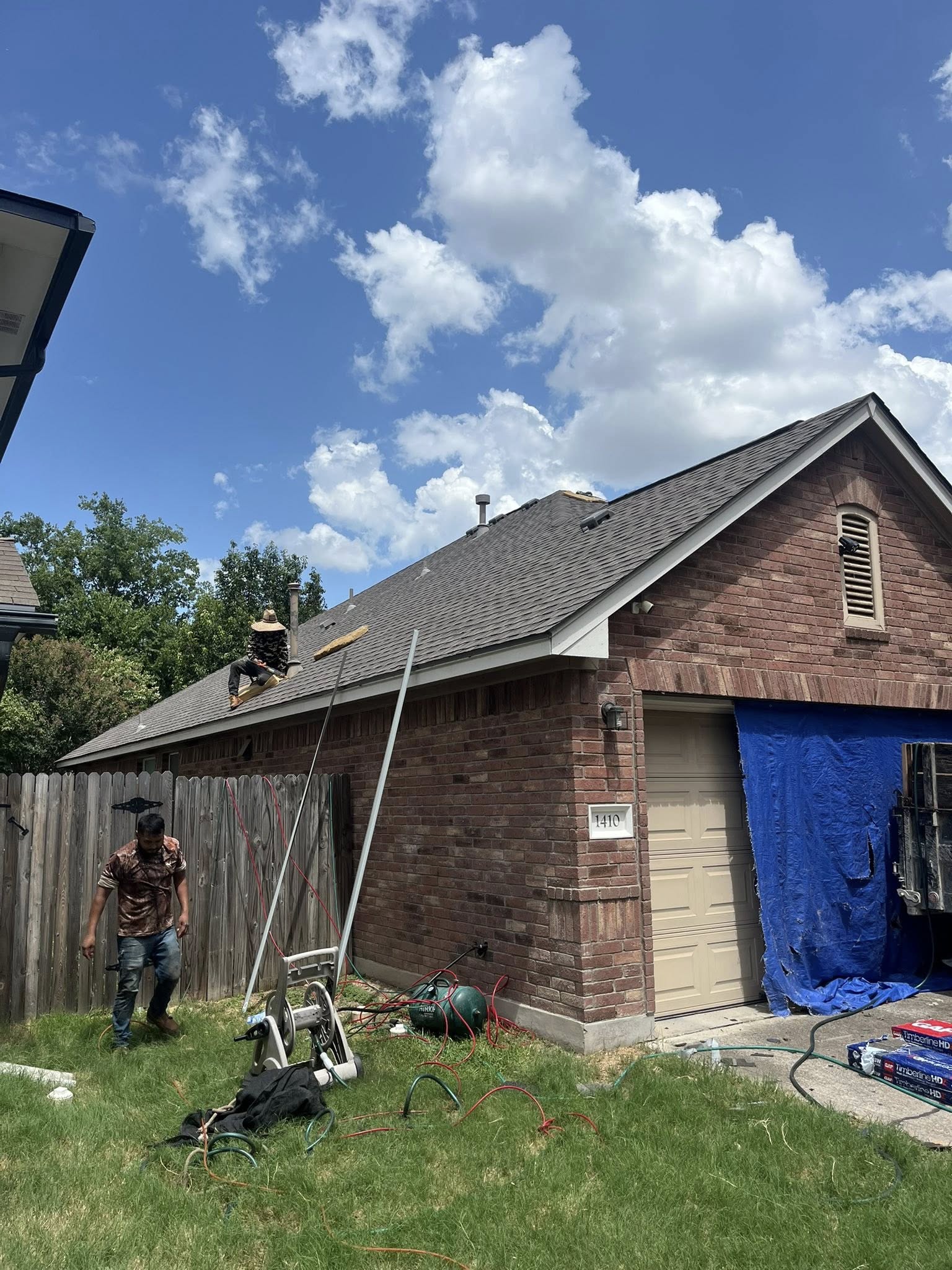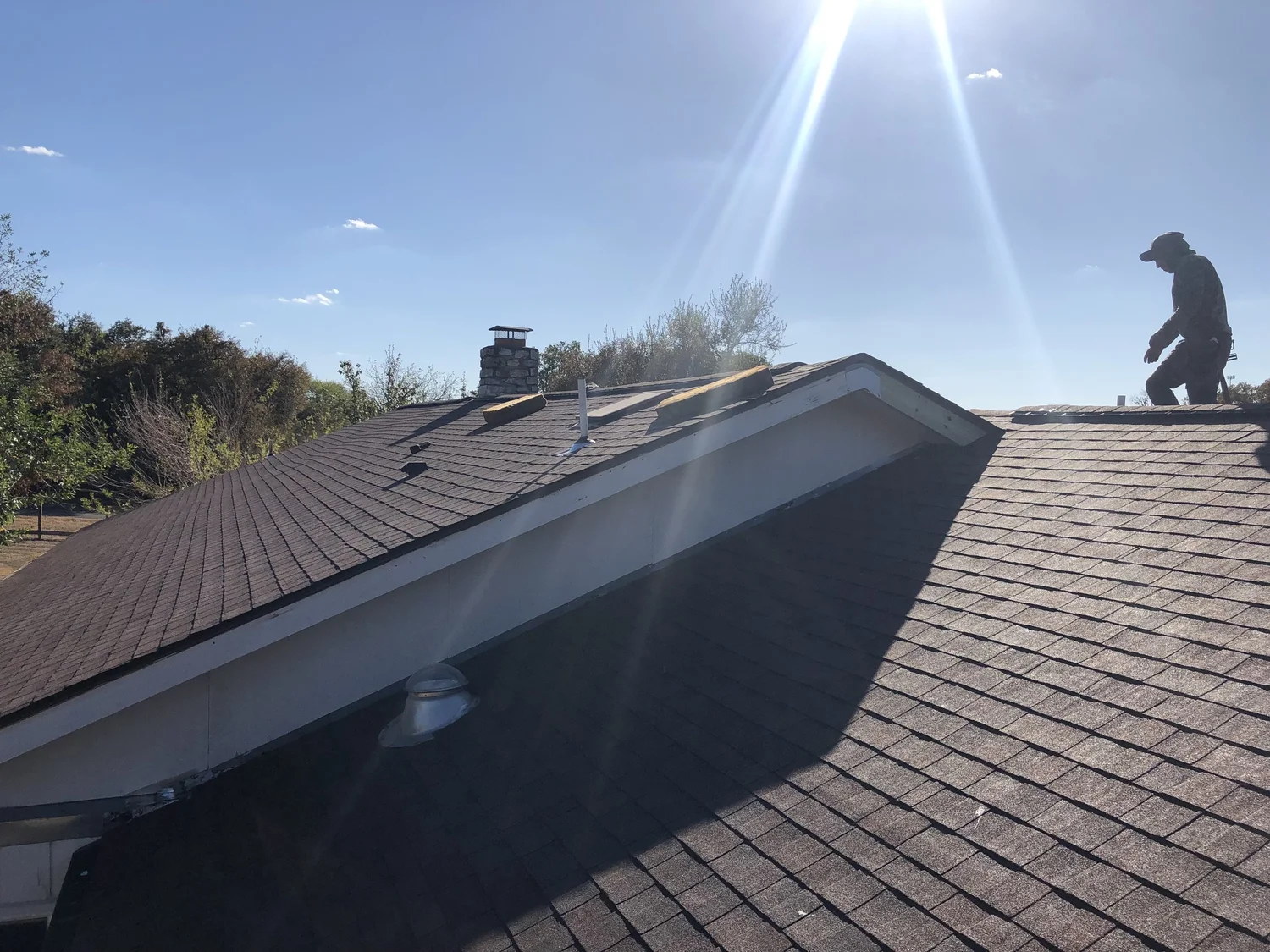
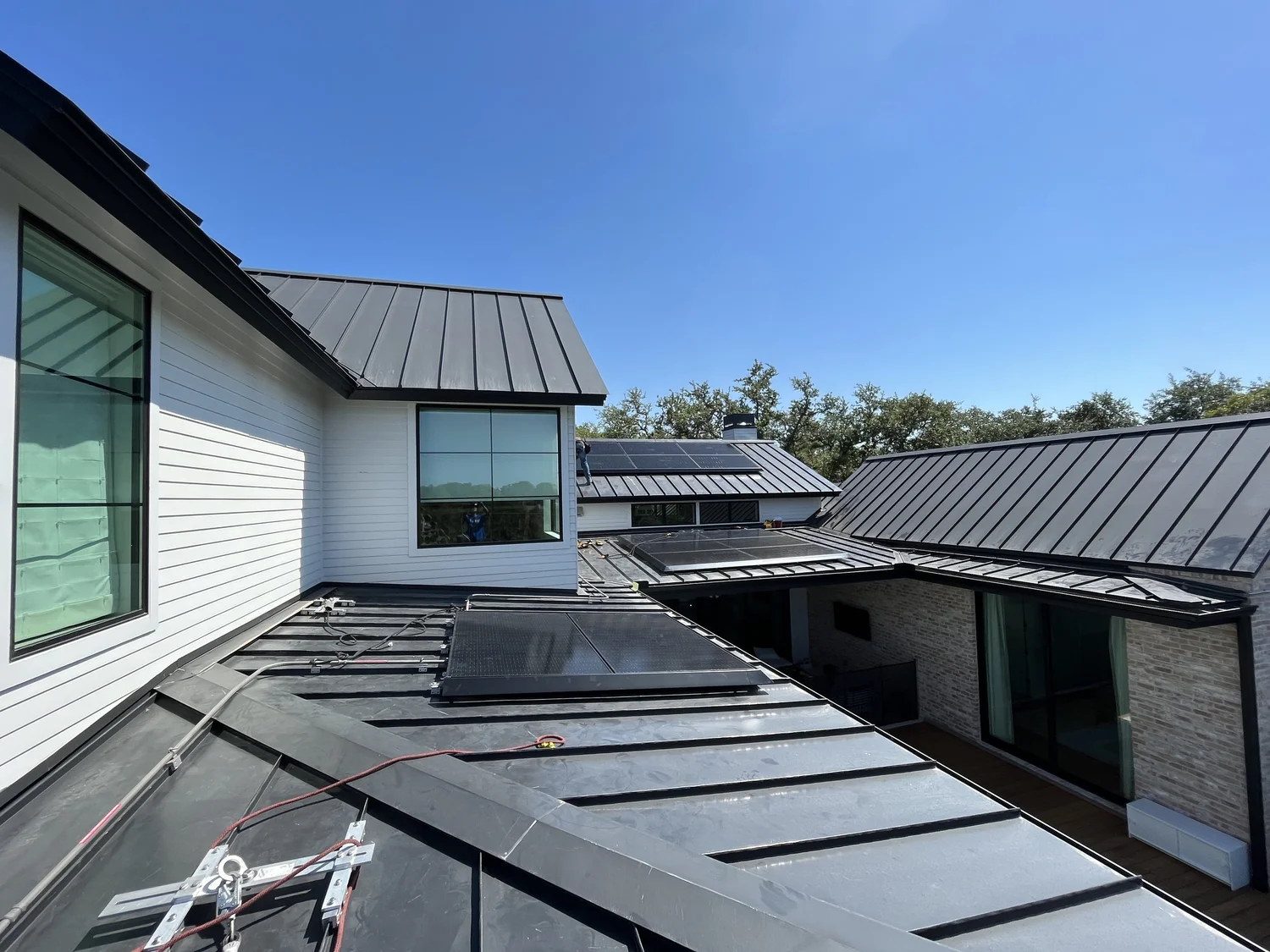
Every spring hail season, the same question comes up on our roof inspections: should the new roof be shingles again, or is this the time to go metal? It is a real decision. A standing seam metal roof costs roughly twice as much as a good shingle roof up front, and it can outlast two or three of them.
Here is the straight comparison for Austin homes: cost, lifespan, hail, heat, insurance, HOA rules, and which one we would pick for different houses.
Metal vs. shingle roofs at a glance
| Architectural shingles | Standing seam metal | |
|---|---|---|
| Typical 2,000 sq ft Austin home | $11,000 to $18,000 | $25,000 to $45,000 |
| Realistic lifespan in Austin | 18 to 25 years | 40 to 60 years |
| Hail | Class 4 versions resist impact best | Rarely leaks from hail, but can dent |
| Heat | Absorbs more heat | Reflects heat; can lower cooling costs |
| Repairs | Easy and cheap to patch | Panels must be matched; fewer repairs needed |
| HOA approval | Almost always allowed | Often needs review; some HOAs restrict it |
What each roof costs in Austin
For a typical 2,000 square foot Austin home, architectural shingles run $11,000 to $18,000 installed, and standing seam metal runs $25,000 to $45,000. For context, budget 3-tab shingles run $9,000 to $13,000, luxury designer shingles $17,000 to $28,000, and synthetic slate or shake $22,000 to $36,000.
What moves the number on either roof: the pitch and how walkable it is, how many layers have to come off, how much rotted decking turns up during tear-off, the number of valleys, chimneys and skylights, and the gutters. Metal also varies a lot with panel gauge, finish and color. For the full breakdown, see our roof replacement cost guide.
Lifespan: the case for paying more
In Austin's sun and storms, a well-installed architectural shingle roof realistically lasts 18 to 25 years. A standing seam metal roof lasts 40 to 60 years. Divide the cost by the years and metal often comes out ahead, but only if you stay in the house long enough to collect.
That is the honest way to think about it. If you plan to sell in five to eight years, a new shingle roof gives a buyer the same "new roof" peace of mind for far less money. If this is the house you plan to stay in, a metal roof may be the last roof you buy.
Hail: what actually happens to each roof
Hail is the reason most Austin roofs get replaced, so this matters more here than almost anywhere.
- Shingles lose granules and bruise when hail hits them, and that damage shortens the roof's life even when it does not leak right away. Class 4 impact-rated shingles, the highest rating under the UL 2218 test, hold up far better than standard shingles.
- Standing seam metal rarely leaks from hail, because the panels are continuous and the fasteners are hidden. Large hail can leave dents, though. On a darker roof in the sun, dents can be visible from the street even when the roof works perfectly.
That last point matters for insurance. Some policies treat dents that do not affect how the roof performs as cosmetic and do not pay for them. Read your policy, or ask your agent, before you assume hail dents on a metal roof would be covered. Our storm damage guide covers how roof claims work in Texas.
Insurance discounts
In Texas, impact-resistant roofing can qualify for a discount on your homeowners premium. The Texas Department of Insurance explains that roofing tested under UL 2218 is rated Class 1 to Class 4, a Class 4 roof gets the biggest credit, and each insurance company sets its own discount. Both Class 4 shingles and many metal roofing products can qualify.
Before you decide, call your agent and ask what a Class 4 roof would save you each year. On some policies it closes a meaningful part of the price gap; on others it barely moves the premium.
Heat and energy
Metal reflects more of the sun's heat than asphalt, especially in lighter colors and with reflective coatings, which can lower your cooling costs in an Austin summer. Shingles absorb more heat, though lighter shingle colors help. If your attic is poorly ventilated or insulated, fixing that will often do more for your electric bill than the roof material itself, so it is worth checking before you choose.
Noise, solar and other questions people ask
- Is a metal roof loud in the rain? Over solid roof decking and underlayment, which is how residential standing seam is installed here, it is not much louder than shingles. The loud tin roofs people remember were usually over open framing on barns and porches.
- Solar. Standing seam is one of the best roofs for solar, because the panels can clamp onto the raised seams without drilling holes through the roof. If solar is in your plans, that is a real point for metal.
- Install time. A shingle replacement on a typical Austin home is usually one to two days on the roof. Metal takes longer, because the panels are measured, formed and fitted more carefully.
- Repairs. Shingles are easy and cheap to patch. Metal needs fewer repairs, but when a panel is damaged, matching the profile and color takes more care.
Weighing metal against a new shingle roof? John will inspect the roof, check the decking and ventilation, and quote both options side by side.
Get a free roof quote →Questions to ask any roofer, shingle or metal
The material gets the attention, but the details under it decide how long the roof lasts. Whoever you hire, ask:
- Are you replacing the flashing or reusing it? Flashing at walls, chimneys and vents is where roofs leak first. Old flashing should come off with the old roof.
- What underlayment are you using? A quality synthetic underlayment is the second line of defense when wind drives rain under the roof covering.
- How will you handle rotted decking? You want a written per-sheet price before tear-off, so there are no surprises once the old roof is off.
- What about ventilation? A roof needs air moving in at the eaves and out near the ridge. Poor ventilation cooks shingles from below and makes the house harder to cool.
- Who pulls the permit, and who walks the job? You should know who is responsible from the first day to the final cleanup.
HOA rules for metal roofs in Austin
Most Austin-area HOAs require architectural review for a new roof, and some restrict metal roofs or limit the colors. Texas law gives homeowners some protection here: under Texas Property Code Section 202.011, an HOA cannot prohibit shingles designed to be wind and hail resistant, more energy efficient, or solar-generating, as long as they resemble the shingles allowed in the neighborhood, are of equal or better quality, and match the look of the surrounding homes.
That protection is written for shingles. A standing seam metal roof generally still needs HOA approval under your neighborhood's rules, so we check the deed restrictions and prepare the submission before anything is ordered. Our HOA approval guide explains how the review works.
Our pick
Choose architectural shingles, ideally Class 4, if you may sell within the next ten years or so, if your HOA is strict about roof materials, or if the budget is better spent elsewhere on the house. It is the right roof for most Austin homes.
Choose standing seam metal if you plan to stay long term, if you want solar, if the home's style suits it, which includes many Hill Country and modern homes, or if you are tired of replacing a roof after every big hailstorm. Over the long haul it is often the better value.
Either way, the installation decides how long the roof lasts: new underlayment, proper flashing at every wall and penetration, and good attic ventilation. See how we handle all of that on our Austin roofing page.
Metal vs shingle roof questions, answered
Is a metal roof worth it in Austin?
If you plan to stay in the home long term, often yes. A standing seam metal roof costs about $25,000 to $45,000 on a typical 2,000 square foot Austin home versus $11,000 to $18,000 for architectural shingles, but it lasts 40 to 60 years compared with 18 to 25. If you may sell within about ten years, a new shingle roof is usually the better use of the money.
How much more does a metal roof cost than shingles?
On a typical 2,000 square foot Austin home, standing seam metal runs $25,000 to $45,000 installed and architectural shingles run $11,000 to $18,000, so metal costs roughly twice as much up front. Pitch, tear-off, decking repairs and panel finish move both numbers.
Does hail damage metal roofs?
Standing seam metal rarely leaks from hail because the panels are continuous and the fasteners are hidden, but large hail can dent it. Some insurance policies treat dents that do not affect performance as cosmetic and do not cover them, so check your policy before you assume dents would be paid for.
Do metal roofs lower insurance premiums in Texas?
They can. The Texas Department of Insurance says impact-resistant roofing tested under UL 2218 can earn a premium discount, with Class 4 getting the largest credit, but each insurer sets its own amount. Many metal roofs and Class 4 shingles qualify, so ask your agent what you would save.
Is a metal roof louder than shingles?
Not much, when it is installed over solid roof decking and underlayment the way residential standing seam is installed in Austin. The loud metal roofs people remember are usually over open framing on barns and porches.
Can my HOA stop me from putting on a metal roof?
Often it can require approval and some HOAs restrict metal. Texas Property Code Section 202.011 protects homeowners who want impact-resistant, energy-efficient or solar shingles that match the neighborhood, but that rule is written for shingles, so a metal roof generally still goes through your HOA architectural review.
How long does a shingle roof last in Austin compared with metal?
In Austin sun and storms, a well-installed architectural shingle roof realistically lasts 18 to 25 years. A standing seam metal roof lasts 40 to 60 years.
Are Class 4 shingles a good middle ground?
For many Austin homes, yes. Class 4 shingles carry the highest impact rating under the UL 2218 test, can qualify for an insurance discount, look like a standard architectural roof, and cost far less than metal. They are our default recommendation for homeowners who want better hail resistance without a metal roof.
Sources
- Roofing discounts, Texas Department of Insurance: UL 2218 impact classes, the Class 4 credit, and that each insurer sets its own discount.
- Texas Property Code, Section 202.011, Texas Legislature: what HOAs may not prohibit for wind and hail resistant, energy-efficient and solar shingles.
Prices on this page come from our own 2026 Austin-area quotes. Rules change, so we check which ones apply to your address before every build. New to a term? See our plain-English glossary.